April 18, 2013

KO Digest Previews Saul "Canelo" Alvarez vs Austin "No Doubt" Trout

Remember the Alamodome
By Joel Sebastianelli - Those who fail to acknowledge the past are doomed to repeat it, and in the sport of boxing, history tends to reproduce moments of significance quite often. Travel back to Texas on September 10th, 1993. Sixty three thousand strong packed the Alamodome in San Antonio to observe the highly anticipated welterweight title fight between undefeated Mexican hero Julio Cesar Chavez and slick southpaw Pernell Whitaker. Official documents recorded a majority draw, but public perception expressed a different story—one of anti-climactic robbery, forever placing an asterisk next to the spotless record of the revered Mexican.

On April 20th, boxing fans will flock to the Alamodome once again, vociferously supporting another undefeated Mexican champion, Saul “Canelo” Alvarez (41-0-1, 30 KOs), in his quest to retain the WBC junior middleweight title and unify against WBA champion Austin Trout (26-0-0, 14 KOs), a smooth American southpaw touting an unblemished professional record that sets a similar stage reminiscent of nearly twenty years ago.

Canelo Alvarez has been hailed as the high profile successor to Mexican legends like Chavez Sr. and Oscar De La Hoya. Bearing the pride and expectations of a boxing crazed nation upon the wings of myriad strong performances against weaker competition, Alvarez now stands on the cusp of validating his status as world champion and penning a new chapter in the book of boxing greats from his homeland. Like Chavez, who entered his one and only bout against Whitaker with a pristine career record of 87-0-0, Alvarez’s meteoric rise to stardom channeled memories of the past and fostered lofty expectations for the future. Already, fight fans have begun frantically calling for Alvarez to step into the ring with top echelon moneymakers like Floyd Mayweather Jr., despite an expansive career tally that features wins against respected opposition that's fallen short of the Mexican icon in terms of  talent. Nonetheless, the man bestowed with the hopes and dreams of passionate patrons numbering millions strong across the globe is deemed the favorite, already anointed with the crown of a proven commodity.

The parallel storylines and details shared by Chavez-Whitaker and Canelo-Trout jump out at the WBC champion, but Alvarez says he hopes to write his own version of the tale furnished with a different result. “It is a very similar fight. I watched it on video several times and Austin Trout, like Pernell Whitaker, is a southpaw, slick, difficult fighter. He's very difficult but that's what we're training hard for. We're training hard for that and come the night of the fight, we're going to make it where it's not so difficult for us.”

Austin Trout, the WBA titlist who hails from Las Cruces, New Mexico, enters the ring as an underestimated underdog with upper echelon skills. Trout erased much of the doubt surrounding his career by outclassing former champion Miguel Cotto on Cotto's home turf at Madison Square Garden in December 2012. The unanimous decision victory shed the 27 year old’s facade of a “paper champion” placed on him by skeptics unimpressed with wins against subpar competition, the likes of which include Canelo’s younger brother, Rigoberto Alvarez.

Yet despite the promise of stardom in the American market, Trout is not the main attraction of the fight card, overshadowed by Golden Boy Promotions’ prized pupil. “I don’t feel uncomfortable as a B-side. I’m more comfortable as an A-side, but it doesn’t bother me because B-side is a state of mind,” Trout told KO Digest during an international media conference call held in anticipation of the upcoming title fight. “I’m coming for the win, for the respect. That’s what I’m fighting for—to get the respect in this game that I feel I deserve.”

Trout’s status as the overshadowed fighter is supported by the lead-up to his brightest opportunity and toughest test to date against Alvarez. Earlier in 2013, the powers that be in promoting the fight proposed Canelo-Trout for the undercard of Floyd Mayweather Jr.’s May 4 fight against Mexican-American Robert Guerrero. Although the fight was pushed forward two weeks, Canelo has continued to lobby for a big money bout against “Money” Mayweather, and a win against Trout could reel in the opportunity against the pound-for-pound kingpin of boxing.

Trout leaves No Doubt at MSG against Cotto
“If he is overlooking me, then that’s better for me,” Trout replied in response to any perceived disrespect by the Mexican champ looking through him. “Regardless of who he wants to fight later, he still has to deal with me on April 20th. He’s been doing this a lot, but things happen to have been going his way. I like the trend that he’s setting, overlooking people.”

Canelo has asserted that he's been doing no such thing, and while this is the correct response to offer to the press, it is difficult to imagine the prospect of a Mayweather fight not weighing on the shoulders of a man who's faced minimal resistance in his rise to stardom from recent foes such as Josesito Lopez, Shane Mosley, Kermit Cintron, and Alfonso Gomez. Anointed and projected even in his youth as the next economic bell cow of the sport, Alvarez still has something left to prove to a legion of unsatisfied skeptics shrinking by the day. At just 23 years of age, Canelo is still a young gun, but the experience and expectations make this bout a must win.

“This fight is the defining fight for Canelo Alvarez,” said promoter Oscar De La Hoya, the last Mexican to reign supreme on the throne of Sweet Science supremacy. “This fight, if everything goes well, him winning this fight will take him over the top and will get him the respect from the critics who don't believe. So it's a very important fight, but it's a fight that the people are going to enjoy and I think both fighters are going to really, really fight their hearts out.”

Canelo pummels Josesito Lopez to the canvas
Austin Trout is a tactician between the ropes, utilizing a systematic style of outpointing opponents from the outside, peppering the jab and using it to set up straight rights. Coupled with strong defense and the ability to ease out of range of his opponents, Trout’s game plan contrasts with the more in-your-face style of Alvarez who lets power shots and combinations flow more freely than his American counterpart, a more fan friendly style that airs more on the side of excitement and brute force than caution and calculation. However, Alvarez’s previous opponents signed contracts as sacrificial lambs, most posing little threat to the prospect’s untainted record or well-being.

Canelo acknowledged that due to the style and effectiveness of Trout, there is an impetus to reign in his aggression and fight a mentally sound fight. “The key is to not get desperate, to not get wild. Take round per round, win round per round and see what comes up and counter that during the fight,” said Canelo through a translator.

After a brilliant performance by Pernell “Sweet Pea” Whitaker in which he was untouchable throughout, the landmark bout against Chavez ended shrouded in controversy that swirled around WBC President José Sulaimán. Trout now makes the trek down into the depths of Texas, a state where corruption has been known to rear its ugly head more often than Joan Rivers, frequently involving the World Boxing Council. If history traversing numerous decades is any indication, Trout will surely need a convincing effort against Canelo in an environment where the crowd will roar at even the most menial maneuvers made by the favored Mexican.

The similarities between Chavez-Whitaker and Canelo-Trout are staunch and run as deep as the San Antonio River, resembling a sequel to a screenplay several years in the making. While the cast of characters are different, the storyline is largely the same. As Canelo Alvarez and Austin Trout enter into battle on April 20th at the Alamodome, both of the junior middleweight division’s top combatants have their feet set firmly in the present, but whether or not the future will echo the past remains to be seen.

Written by Joel Sebastianelli - exclusively for KO Digest  

Joel joined KO Digest in January 2013 and has been a fixture on press row in the New England area for three years. In 2012, he served as the host of “The Boxing Fix” on Leave it in the Ring Radio. Sebastianelli is the future of boxing journalism and broadcasting.  

Joel can be found Tweeting on Twitter @JJSebastianelli  

April 15, 2013

KO Digest Spotlight on Boxing's Up and Comers - Karim Mayfield

Karim "Hard Hitta" Mayfield
By Terry Strawson - Karim Mayfield was born in San Francisco, California on December 14, 1980. He is undefeated in 18 professional fights, with 10 of his victories coming inside the distance, and he is now the #1 ranked contender to the WBO junior welterweight title held by Mike Alvarado. His position atop those alphabet ratings becomes all the more impressive when you consider his late introduction to boxing.

"There was a gym that had opened up just a few blocks up from where I used to hang out with my friends. A friend of mine told me I should go check it out. I wasn't  even interested in boxing but one day I strolled over there and checked it out. I was 20 years old."

Despite not showing interest in boxing during his youth, the now 32-year-old Mayfield was certainly no stranger to fighting. The standard for settling disputes whilst growing up was some good old-fashioned fisticuffs. During an enjoyable and engaging conversation last weekend, the charismatic Mayfield (17-0-1) reminisced a little and credited some of his success thus far to his experiences on the street. "Most of my fights and my amateur experience came from the streets. I guess that's why I've been so successful in starting off so late because we did have a lot of fights. We fought a lot. I had 28 cousins so we would always fight with the gloves on, or with socks. Five or six pairs of socks on our hands and we would duke it out," said a laughing Mayfield.

His amateur experience, inside the ropes, is more impressive than his late start may suggest. Mayfield managed to chalk up a respectable 40-5 record and came amazingly close to making the 2004 US Olympic Team that was headed for Athens, Greece that summer. "People told me 'you don't even need to try to make the Olympics because guys up there have two hundred fights' and I had only had about twenty at the time but I ended up making it all the way to the Olympic training grounds in Colorado Springs. I actually got a bronze in the Western Finals," recalled Mayfield with pride.

Roy Jones compares Mayfield to Mike Tyson
As a fighter, Mayfield is a beast. At a glance, his approach can appear ungainly but a closer look conveys craft and experience beyond his approximately 60 fights, both amateur and professional. His attack, at its best, is varied and explosive - bordering on frightening. At his worst he can become predictable and trigger-happy with his powerful right hand. His drive and determination are only rivaled by his athleticism and natural ability. Compared by Roy Jones Jr. to Mike Tyson, he delivers his thunderous right hand with the worst of intentions and his uppercuts and hooks are compact and crisp when utilized.

"I definitely have a tremendous right hand and I'm working on setting it up a bit more as opposed to just throwing it. People can say 'well, he only has a right hand' but could you handle it? I mean, it's only two hands that everyone has, it's not like everybody got seven and I only have one, everybody only has two, so I'm halfway there," joked Mayfield.

His professional debut came in 2006 against Chris Mickle (1-0-1) on the undercard of a Robert Guerrero fight at the Oakland Arena in Oakland, CA. "It was in my hometown which was great and it was on a great card, Robert 'The Ghost' Guerrero was on it, Anthony Dirrell and Andre Dirrell were on it. It was just an explosive night and everybody got a knockout. It was like my coming out party. Definitely a good look for me and the Bay Area," recalled Mayfield.

Mayfield throws the right hand
Mayfield's however, has not been guided carefully by one of the major promoters in boxing. Early in his professional career, Mayfield was brought in to provide challenges to prospects expected to make the grade and each time he prevailed. He was expected to offer up a stern test, yet fail, against Francisco Santana back in 2008 but he ended up being on the right side of a split-decision. A year later, after Santana had won three more fights, his handlers arranged an opportunity for redemption.

Mayfield had other ideas and knocked Santana out in the rematch.

"Hard Hitta," as he is known by his strong following in his native San Francisco, has certainly taken the road less traveled. Mayfield was a sparring partner for world champions Zab Judah and Antonio Margarito long before turning pro. An Olympic alternate after 20 fights, his big break came, not after a big win, but after an impressive sparring session at the world famous Wildcard Gym in Hollywood,CA.

Sparring Pacquiao opened doors for Mayfield
"I didn't get signed until I sparred Manny Pacquiao and when I did good with him in the gym I started getting phone calls. People in the gym were silent, when I had my best day with him it was so quiet, like a ghost town. There are no pats on the back when you do that to the champion. They where whispering 'good job' to me. And literally two days after that, I had a few contracts on my table." According to Mayfield, roving video reporter Elie Sechback was actually contacted by Top Rank in order to remove internet footage from one of his better sessions at the Wildcard.

In 2011, after being inactive for just over a year, Mayfield stepped into the ring against former world champion Steve Forbes (35-9) on ESPN Friday Night Fights. Mayfield was in the ascendancy throughout but relied heavily upon his right hand and his strength in general to suppress the advances of a Steve Forbes in the twilight of his career. "I was in camp when Andre Ward was going to the Olympics and I actually sparred Forbes twice. I saw that I was able to bully him as opposed to boxing him, and he was getting ready for a title fight at the time, but that stuck in my mind."

After wearing Forbes down and eventually stopping him in the 10th and final round, Mayfield went on to challenge Patrick Lopez (20-4) for the vacant WBO NABO light welterweight title. "That was a hard fight. The guy was fucking relentless," said Mayfield. "I actually knocked him down three times and he kept coming back. We head-butted each other in that fight and both got cut. I had blood in my eye for a round, it was tough, he was a southpaw and he threw every punch hard."

Despite dominating Lopez and registering scores of 99-88, 97-90 and 98-90, Mayfield counts the fight as his toughest to date. A young fighter can learn a lot about himself in times of adversity and the extremely tough Mayfield certainly dug deep during that encounter.

His next fight came against Raymond Serrano (18-0) and Mayfield successfully defended his newly won WBO NABO title with a 5th round stoppage. At 16-0-1, Mayfield was primed for his first appearance on HBO and it came against Mauricio Herrera (18-2) in Verona, NY last October. Herrera, who holds victories over Cleotis Pendarvis, Ruslan Provodnikov and Mike Dallas Jr, was coming into the fight on the back of what was a spirited yet losing effort against Mike Alvarado. "My mind-set going into that fight was time management. I know this guy throws hundreds of punches and I don't wanna get involved in a slugfest. I don't want to try and match him because I throw every punch hard and don't wanna punch myself out. There are times when I need to be outside, chilling a little bit, and then there are times I need to be going forward but I just wanted to pick him apart."

Mayfield was a Hard Hitta against Herrera
After a fairly ugly start to the contest where Mayfield could not quite find his range, the fight opened up. Herrera, who walked forward constantly, found himself eating some big shots as Mayfield, like the fight itself, opened up and began to offer a variety of offense that Herrera did not seem to have an answer for. Mayfield's right hand repeatedly found the target over the top and his hooks and uppercuts, when thrown, were launched short and furiously to their mark. Mayfield neutralized Herrera and made him appear ordinary en route to a well deserved decision victory.

The win on HBO was certainly the highlight of his career thus far.

So what's next for Mayfield? Well, that's not really clear at this point in time. His #1 ranking in the WBO may not count for much in the immediate future, as the potential rubber-match between Mike Alvarado and Brandon Rios would surely take precedent over any mandatory obligations. Promoter Gary Shaw told KO Digest that he is "trying to put Mayfield on HBO again" and went on to say that he thinks "Mayfield is a wonderful talent." Although he couldn't comment on potential opponents, Shaw did say that he hopes to have Mayfield in the ring, "June 8th or the first Saturday in August."

Mayfield remains positive and is waiting patiently for that opportunity. He has a solid team that surrounds him including longtime trainer Brian Mciver, his brother LaRon Mayfield (who Karim was adamant I mention to show some gratitude) and now Virgil Hunter who has been apart of his camps on and off from the outset. The "Hard Hitta" is in good hands.

With the junior welterweight division crammed with talent and marquee names such as Mike Alvarado, Brandon Rios, Danny Garcia, Amir Khan, and Lamont Peterson among others, there are certainly plenty of options. Mayfield's unorthodox style and his incredibly dangerous right hand may present issues when matching him but with such a deep pool to draw potential opponents from, we should expect to see him in an exciting fight sooner rather than later.

Strengths:  Power, conditioning, and unorthodox style
Weaknesses: Raw technique, late start in boxing
Overall Rating:  B 

Written by Terry Strawson ~ exclusively for KO Digest

Look for a new KO Digest Spotlight on Up & Comers on the 15th of every month! 


The author would like to thank Anthony Ross from DaTruthBoxing and BeatTheCount 

April 11, 2013

KO Digest Previews Nonito Donaire ~vs~ Guillermo Rigondeaux

By Gopal Rao — Ever since dismantling a flyweight Vic Darchinyan in 2007, Nonito Donaire has enjoyed a career arc reminiscent of Oscar De La Hoya. Like Oscar before him, Nonito has climbed through numerous weight classes and yet still appeared to be the bigger man in almost all the matchups. And like De La Hoya, Donaire has done it with the benefit of fast hands, a sturdy chin, and a beautiful left hook that has seemed at times like the only weapon he would ever need to demolish anybody in his way.

But the stardom he's achieved has brought a healthy serving of skepticism along with it, just as it did for De La Hoya in the late 90's and early 00's. There are still many fans and observers who insist that Donaire's success is the product of careful matchmaking and savvy marketing, and that the express train to stardom will be derailed as soon as he gets in the ring opposite a fighter in his prime with bona fide pound-for-pound credentials.

With that comparison in mind, former Cuban Olympic gold medalist Guillermo "The Jackal" Rigondeaux stands poised to propel himself to stardom at Donaire's expense by upsetting the applecart in the same way that fighters like Shane Mosley and Bernard Hopkins once did with De La Hoya.

Donaire vs Rigondeaux is one of the biggest fights of 2013 in terms of its potential to shake up the pound-for-pound rankings, and for its relative place within the storied history of the 122 lb division. So how do the fighters stack up against each other, and what should we look for in this WBO/WBA super bantamweight unification fight when the opening bell rings on April 13th at Radio City Music Hall in New York City?

Of the two, Donaire (31-1, 20 KOs) is the fighter more recognized for his punching power due to highlight reel knockouts scored in lower weight classes. And although Donaire has an admirable array of boxing skills, from bob-and-weave head movement to pinpoint counterpunching, it is Rigondeaux (11-0, 8 KOs) who is considered the technical marvel, showing an uncommon level of ring savvy, throwing punches from all angles with both hands, and exhibiting incredibly quick and precise footwork. Yet there still seem to be persisting questions about Rigondeaux’s durability, and specifically, his ability to take a clean punch from an elite puncher like Donaire.

Donaire was not impressed with Rigondeaux against Cordoba
Rigondeaux’s coming out party was supposed to be a highly visible slot on the undercard of Manny Pacquiao vs Antonio Margarito in November of 2010. On that night, in only his seventh professional fight, he faced veteran Panamanian Ricardo Cordoba, a former world title holder, with a vacant title at stake.

That Rigondeaux had been fast tracked to a title shot came as little surprise to most observers. After all, none other than Hall of Fame trainer Freddie Roach had proclaimed Rigondeaux (reportedly 243-4 as an amateur) to be one of the best prospects he had ever worked with. However, after starting off quickly, flooring Cordoba with a body shot in round 4, Rigondeaux got clipped with a right to the face in round 6 that not only caused him to touch the canvas with his glove – an official knockdown - but it also sent him into defensive survival mode for the remainder of the fight, which he won by split decision.

“When you're doing this for quite a while, you tend to be motivated with the fighter in front of you, and that's the reason why I disregarded Rigondeaux in the beginning, because of the Cordoba fight that I saw,” said Donaire recently, when asked why he was reluctant to acknowledge the need to accept Rigondeaux as an opponent in the past.

Since that fight, Rigondeaux’s level of competition has plateaued, featuring high level prospects like Roberto Marroquin and Teon Kennedy, and second tier belt-holders like Rico Ramos. It is worth noting that Marroquin also managed to stagger Rigondeaux with left hooks on several occasions, but was otherwise dominated.

Donaire wanted Mares first then Rigo
Those subsequent performances of Rigondeaux's must have made an impression on Donaire at some point, however, as he eventually came around to the idea of making the fight happen when a more sought-after fight with Abner Mares could not be made. “When the fight with Mares didn't happen, then of course, Rigondeaux was the next guy in line, and the more that I'm watching, the more that I'm getting excited to fight. The more I'm seeing that the guy has a lot of quality, a lot of talent,” said Donaire.

“I think it's his ability to see punches, and his ability to be intelligent in there, and of course he has the speed and power like I do. I think that it's going to be fireworks between us, as much as it might be a chess match, because we're both offensive fighters,” said Donaire about how the matchup appears to him now.

Although it's possible to envision Rigondeaux putting on a clinic of counter-punching, defense and ring generalship, it seems as though the boxing public is adamant that both men must throw caution to the wind at some point. “For this fight, I will try to engage a lot more than I have in the past,” promised Rigondeaux.

If he's serious about that however, then there also remains the question of what will happen when he gets hit on the chin by a clean shot from Donaire, who echoed Rigondeaux's comments, saying that he owes New York City a good fight because of his lackluster showing against Argentinian Omar Narvaez at Madison Square Garden in 2011. “I'm thankful for the fans, so I want to give them the best fight that I can, and that's why I'm not afraid to get hit or to take a hit. I'm there to bring excitement as much as I can,” Donaire emphasized.

Similarly, Donaire's next fight, against former belt-holder Wilfredo Vazquez Jr., was anything but smooth sailing. By all rights, Donaire was expected to run right through his vulnerable and relatively unproven opponent. Instead, what he got was an awkward and oddly paced fight that drew audible boos from the live crowd, and a split decision victory from the judges. In the aftermath of this appearance, it was revealed that Donaire had injured his vaunted left hand. Although the injury never escalated into a major concern for Donaire, it appeared to be a factor in his hard fought victory over South African Jeffrey Mathebula, whom he floored once, and hurt badly, but could not stop en route to a unanimous decision. But Mathebula, like Vazquez Jr., was a relatively unknown quantity to American audiences, even though he had fought world class opponents in previous fights.

Donaire shows the effects of hitting and getting hit
Donaire emerged from both the Mathebula and Vazquez Jr. fights with visible swelling around both eyes, and various marks on his face. He seemed in control of both fights from start to finish, but he was clearly getting hit cleanly along the way, and the effects were plain to see. Although Donaire dominated subsequent fights against Toshiaki Nishioka and Jorge Arce, it was hard to miss the fact that neither opponent appeared to be in his prime on fight night, and both fought with extreme caution at the opening bell.

In 32-year-old Guillermo Rigondeaux, the 30-year-old Donaire is faced with an opponent that is still ostensibly in his physical prime, and whose technical skills are every bit as honed and polished as his own, if not more so. Rigondeaux is very difficult to hit cleanly, and almost impossible to hit twice in row, but he does seem to get shaken up by a solid shot.

Though Donaire takes a clean shot well, and delivers one even better, he is prone to getting touched up in between. Still it seems hard to imagine that Donaire will not land cleanly at some point against Rigondeaux. After all, if the towering but awkward Cordoba and the relatively inexperienced Marroquin were able to do it, then so too will the ultra-talented Donaire. However, Rigondeaux was able to overcome those setbacks and turn those fights back in his favor in short order. And although there were shaky moments that included a flash knockdown, at no point in either fight did Rigondeaux appear to be seriously in danger of being stopped.

On the other hand, Donaire will almost certainly be available to be hit by Rigondeaux as well, and the southpaw Guillermo has a stunningly wide array of punches at his disposal to oblige him with. Rigondeaux’s body punching in particular seems to be a concern, and it’s anybody’s guess how well Donaire will react to the kind of body shot that Rigondeaux stopped Rico Ramos or floored Ricardo Cordoba with. Still, it seems as though the fight with Donaire represents an extremely ambitious step up in class for Rigondeaux, who despite legendary amateur status, has only had eleven professional fights.

The most daunting possibility, of course, is that very little of anything happens over the first half of the fight, with neither fighter willing to take any real risks. This sort of fight would appear to be more difficult for Donaire, who craves the exchange of punches at a fast pace, than on Rigondeaux, whose style is built on being patient and methodical. However, given the climate of the pre-fight buildup, and the pressure on both fighters to not just win, but perform, both fighters will likely feel a powerful urge to go for the decisive win if at all possible.

Donaire KO's Montiel in the 2nd round
Another possibility is that the critical moment of the fight happens early and unexpectedly, with a lightning fast exchange taking place in the blink of an eye and settling matters then and there for the remainder of the fight.

This is what happened when Donaire fought Fernando Montiel at bantamweight in early 2011.  Obviously, frequent exchanges will favor Donaire, although one shouldn’t dismiss the possibility of Rigondeaux ending things with a withering body shot.

Both training camps have been relatively quiet as far as generating headlines or controversy. The only notable incidents that took place were Team Rigondeaux’s awkward last minute attempts to switch drug testing administrators from the Voluntary Anti-Doping Association (VADA), which already randomly tests Nonito year round, to the United States Anti-Doping Agency (USADA), as well as the mid-camp revelation that Team Donaire had parted ways with controversial long time advisor Victor Conte.

Rigondeaux works with trainer Pedro Diaz
It’s also worth noting that Team Rigondeaux has retained the services of former Cuban National Team Coach Pedro Diaz in place of former head trainer Jorge Rubio. While a switch in lead trainers is potentially a moment of instability that can portend struggles in the short term, Diaz and Rigondeaux are already quite familiar with each other due to their work together in the past.

Neither revelation seems to be of any real consequence and reports have seemingly confirmed that VADA has indeed taken over the chore of administering drug tests for both fighters, and the split with Conte has apparently had little effect on the day to day operations of Team Donaire’s camp, which is overseen by trainer Brian Schwartz and conditioning coach Mike Bazzle, with Robert Garcia assuming the lead role on fight night.

Barring some hidden issue or last minute injury, it's reasonable to assume that both fighters will be entering the ring at some place close to their peak condition. With many of the two fighters’ best assets seemingly neutralizing each other, it would be hard therefore to pick against the boxer with greater experience fighting A-level competition as a professional, and that would be Donaire. Although Rigondeaux’s terrific skills and ring savvy have given him an insurmountable edge so far in his eleven professional fights, we have not seen how effective they are against the highest level of competition out there.

We have already seen Donaire match up against fellow pound-for-pound aspirants, albeit in lower weight classes, and we already know that even if his technique appears to be less polished and fluid than Rigondeaux’s, at least to the casual observer, he has gotten the job done so far against the best.

Both fighters are blessed with above average hand and foot speed, agility, reflexes and hand-eye coordination, and both men are considered thinking man's fighters as well. HBO analyst Roy Jones Jr. has even remarked on air that Nonito is the current fighter that reminds him most of himself during his dazzling prime as the consensus pound-for-pound kingpin of boxing.

For Rigondeaux to prove the experts wrong and beat Donaire, he would have to fight something close to the perfect fight, much as Shane Mosley and Bernard Hopkins did when they finally got their crack at Oscar De La Hoya in the previous decade. While this is not outside the realm of possibility given Rigondeaux's superlative technical skills, I see the margin for error being incredibly slim for him. 

The Filipino Flash wins again


OUTCOME: On April 13th in New York, we'll see Nonito Donaire overcome an early points deficit to take control in the middle rounds en route to a late stoppage victory over Guillermo Rigondeaux in a tense but controlled confrontation that sees Nonito continue uninterrupted on his path to a golden future.

April 5, 2013

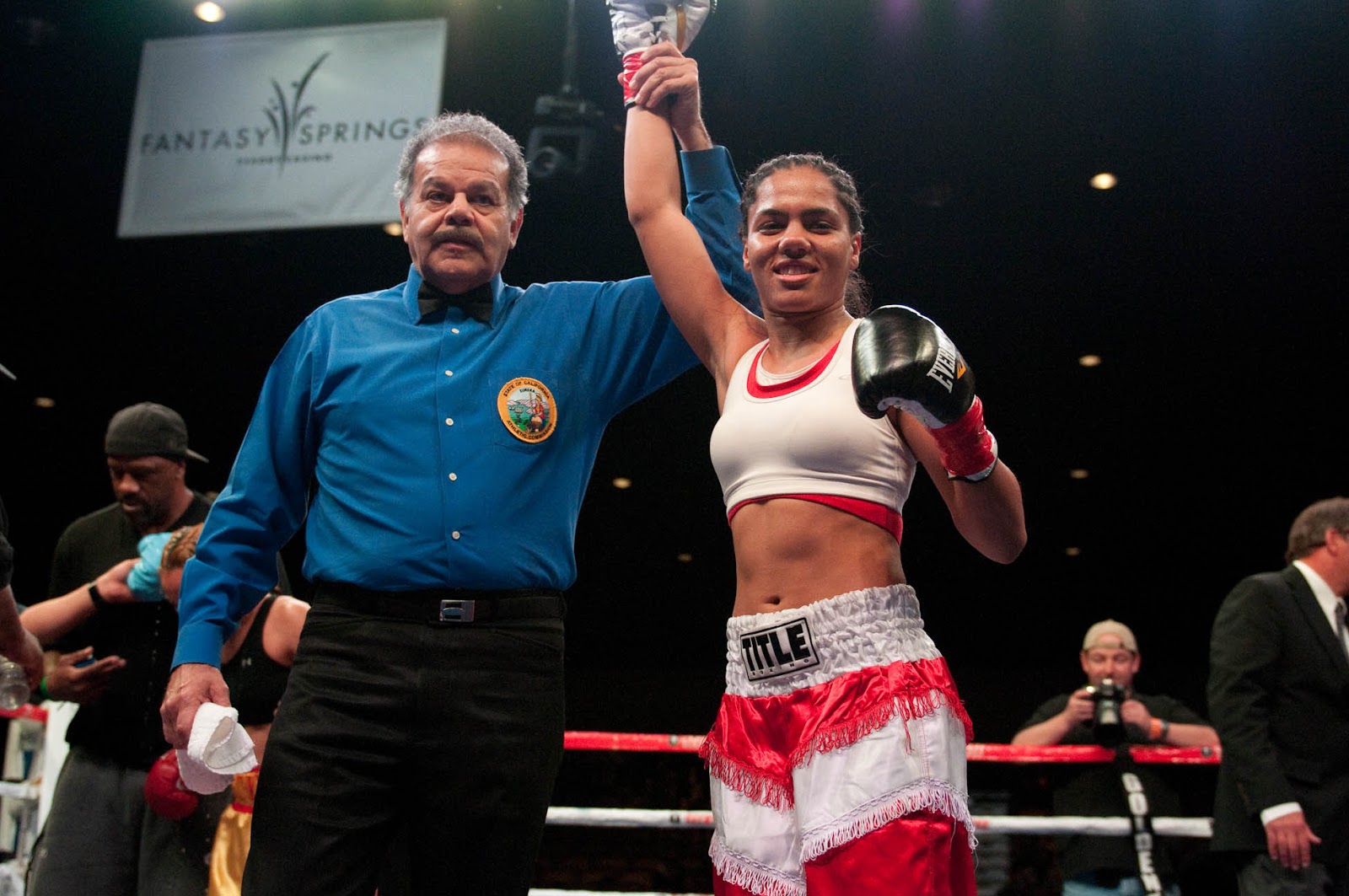
The Sweet Side of the Sweet Science - Women's Boxing Monthly Vol. 2

By Mark A. Jones – Women’s boxing entered March like a lion with Ramona Kuehne successfully defending her WIBF, WBF and WBO super featherweight titles in Germany against Halanna Dos Santos. In Japan, on a card that contained six female bouts, WBA minimumweight champion, Etsuko Tada dominated the iron-fisted Yuko Kuroki. Women’s boxing continued to roar at mid-month witnessing WBC minimumweight champion, Naoko Fujioka knocking out trialhorse Maribel Ramirez in the fourth round of a scheduled eight and WBC lightweight champion, Erica Anabella Farias and WBA, WBO light flyweight champion, Yesica Yolanda Bopp both winning by stoppage in title defenses. 

The month concluded with Eva Halasi capturing the IBF welterweight title by upsetting Ivana Habazin by unanimous decision. Flyweight prospect Patty “Boom Boom” Alcivar won the New York State female flyweight title by pounding out a decision over the experienced Eileen Olszewski. Arguably the best match-up of March witnessed the rugged, Melissa “Mighty” McMorrow successfully defending her WBO, WIBF flyweight titles by winning a ten-round split decision over Nadia Raoui in a fist-flying affair.

Delfine Persoon, the current WIBF, IBF lightweight champion, won the WBC lightweight title eliminator by knocking out Kremena Petkova in the second round of a scheduled ten. With the win, Persoon moves to (24-1, 10 KOs) and is ranked as the #1 contender for the WBC lightweight title currently held by Erica Anabella Farias. Persoon has developed into a devastating right-hand puncher, and a match-up with Farias would be marketable to any network as women’s boxing continues struggle to gain main stream attention

A look back at March 2013 in women’s boxing:

On March 3 at the MGM Grand at Foxwoods Resort, Mashantucket, Connecticut, Shelly “Shelito’s Way” Vincent, 124, Providence, Rhode Island, entered the ring with multi-colored hair and attire resembling not only a world class super bantamweight, but a super hero about to save the day by besting a super villain lurking at ringside. Mikayla “MK Ultra” Nebel, 122, Columbus, Ohio, resembling nothing comparable to a super villain became the recipient of Vincent’s two-fisted attack.

Shelito goes to 8-0 against Nebel
Nebel, a long-range timing fighter, was unable to lay a serious glove on Vincent who employed a bobbing and weaving defensive technique, allowing her to easily evade any attack from Nebel while moving her into counters of her own. In the end, Vincent moves to (8-0, 0 KOs) winning an unanimous decision (40-36 x3) and looks to be a serious contender at both bantamweight and super bantamweight. Nebel drops to a deceiving (0-4); a record not indicative of her skill set.

Also on March 3 at Korak Hall, in Tokyo, Japan, Etsuko Tada, 105, Kyoto, Japan, successfully defended her WBA female minimumweight title for the ninth time with an unanimous decision over Yuko Kuroki, 104 ½, Fukouka, Japan, over ten rounds; scoring (98-92/98-92/99-91). With the win, Tada moves to (12-0-2, 2 KOs) maintaining her position as the #2 ranking female minimumweight boxer behind Naoko Fukioka (10-0, 6 KOs) also of Japan. With the loss, Kuroki drops to (9-3, 5 KOs) and remains a serious challenger owning serious firepower in both hands coupled with an aggressive take-no-step-back style.

On the undercard, Ibeth Zamora Silva, 106 ¾, Mexico, won the vacant WBC female light flyweight title by a razor thin split decision over Naoko Shibata, 106 ¾, Tokyo, Japan (96-94/96-94/94-96). It was the second close decision loss in six months involving title fights for Shibata who, in September, discovered herself on the short end of an unanimous decision to Etsuko Tada in a bid for the WBA minimumweight title. Silva once held the WBA minimumweight title on an interim basis, and held the WBC Youth title at minimumweight and light flyweight. Silva improves to (17-5, 7 KOs) elevating into elite status in the ever-crowded light flyweight division that contains pound-for-pound favorites, Yesica Yolanda Bopp, Esmeralda Moreno, and Jessica Chavez. Naoko drops to (9-3, 3 KOs) remaining a good midlevel contender at minimumweight and light flyweight.

On March 9 in Buenos Aires, Argentina, Erica Anabella “La Pantera” Farias, 133 ¾, Virreyes, Argentina, retained her WBC lightweight title and her elite pound-for-pound status with a third round knockout of Liliana “La Tigresa” Palmera, 131 ½, Monteria, Columbia. Farias, in her stalking style, started quickly hurting Palmera early and often with the right cross to the body and head. Fighting only to survive, Palmera had enough movement and evasive skills to make Farias work to find her. Early in the third round, a right-cross setup by a wide left hook, found its mark on Palmera’s chin knocking her to the canvas. Palmera rose quickly, but her fate was sealed as she was quickly trapped in the corner and sent to the canvas to stay by a right hand to the ear setup by a preparatory combination to the body.

Winner and still champion - La Pantera Farias
The iron-fisted Anabella Farias has knocked down ten of her last twelve opponents stopping nine inside the distance with only Melissa Hernandez, Victoria Bustos and Ann Saccurato avoiding a defeat by stoppage. With the win, Farias improves to (16-0, 9 KOs) successfully defending her WBC female lightweight title for the eight consecutive time dating back to her wining the interim version in 2010. Palmera suffers her second stoppage defeat to Farias and witnesses her record drop to (21-10-3, 15 KOs) and (0-7) in title fights involving four different weight classes.

On March 23 at GETEC Arena, in Magdeburg, Germany, "Mighty" Melissa McMorrow, San Francisco, CA, USA, 110 ¾ retained her WBO and WIBF flyweight titles with a split decision victory over Nadia Raoui, Germany, 109 ¾ in a hard-fought ten. Two judges favored McMorrow (99-91/96-94) with the lone holdout determining that the native of Germany, Nadia Raoui delivered better than she received at (96-94). The two top-level flyweights split the early rounds with McMorrow, a forward-moving volume puncher successfully waking down her opponent evading most of what Raoui had to offer with a bob-n-weave style of defense. The success of McMorrow’s early bodywork allowed the defending champion to migrate her attack upstairs in the later stages of the fight. Nadia Raoui, a counter-puncher who mostly moves laterally, employed a different strategy for this battle. She moved mostly straight back forcing McMorrow to pursue her in a straight line in order to run McMorrow into quick counters down the middle of her defense. Raoui had sporadic success with the jab, right cross, and right uppercut, but did not possess the necessary firepower to dissuade the ultra-aggressive McMorrow.

Eddie Croft, the manager-trainer of McMorrow, disseminated proper adjustments between rounds which blunted any momentum Raoui may have built in the early stages of the fight. In the end, McMorrow’s early body punching, constant pressure, and extremely high punch volume took its toll on Raoui as she struggled to keep pace and wilted in the final stages of the battle. McMorrow swept rounds 8, 9, and 10 cementing her victory and maintaining control of two world titles at flyweight. McMorrow moves her record to (9-3-3, 1 KO) opening up endless possibilities with fellow flyweight champions, Ava Knight, Carina Moreno, and Renata Szebeledi or the still popular, Susi Kentikian. With the loss, Nadia Raoui stays relevant with a record of (15-2-1, 3 KOs).


A look ahead to April 2013 in women’s boxing:

On April 4, at the Roseland Ballroom in New York City, Heather “The Heat” Hardy (4-0, 0 KOs), Brooklyn, NY, takes on Mikayla “MK Ultra” Nebel (0-4), Columbus, OH, in a six round bout. This is a rematch of Hardy’s August 2012 professional debut where she confronted difficulties suffering a knockdown in the first round, but rallied to win the final three stanzas and the fight by a four-round unanimous decision victory. An action fighter with a huge fan base in New York City, Hardy trains out of the legendary Gleason’s Gym in Brooklyn, New York, with boxing trainer, Devon Cormack. When not training to improve her status as a super bantamweight prospect, she can be found training clients at Gleason’s Gym.

On April 6, in Zamora, Mexico, Irma Garcia (6-0-1, 1 KO; 4 no contests), a southpaw, defends her WBA female bantamweight title by re-matching Janeth Perez (17-1-2, 4 KOs) in a Boxrec 5-star rated match-up. Irma Garcia, a boxer-puncher with good movement, on January 15, 2013 won the WBA female bantamweight title by boxing her way to a controversial unanimous decision victory over Janeth Perez whose effective aggression and volume punching made for many lively exchanges. Look for Janeth Perez, an aggressive midrange left hook artist, to again take the fight to Irma Garcia; both fighters are very ordinary defensively with Garcia relying on movement to evade punches. Perez is far superior from close range and took advantage of Garcia’s stiff posture and poor in-fight skills in the previous meeting.

On April 12, at the Dover Downs Casino, Dover, Delaware, “Queen” Ronica Jeffrey (11-0, 1 KO), Brooklyn, NY, faces Natasha “The Nightmare” Spence (6-1-1, 5 KOs), Mississauga, Ontario, Canada, for the interim WIBA super featherweight title. Jeffrey is currently holding the WBC Silver female super featherweight title; a title she won by besting “Lethal” Lindsay Garbatt over ten rounds in August 2012.

This is an excellent stylistic match-up featuring the defensive wizardry of Jeffrey and the power-punching and forward aggression of Spence. Spence suffered her lone defeat at the hands of fellow hard-charger, Melissa St. Vil in February. Jeffrey, a three-time New York Daily News Golden Gloves Champion, is an emerging star in the sport.

On April 20, at the Arena Roberto Duran, Panama City, Panama, southpaw Alicia “Slick” Ashley (18-9-1, 1 KO), Westbury, NY, battles Chanttall “La Fiera” Martinez (18-5-0, 7 KOs), David, Panama for Ashley’s WBC female super bantamweight title. Ashley, a master boxer, won the title in July 2011 with a dominate decision victory over Christina Ruiz and has defended it successfully once since. Ashley holds wins over Alesia Graf, Elena Reid, Kelsey Jeffries, Bonnie Canino and all-time great Marcela Eliana Acuna. She is facing a formidable opponent in Martinez, a wide-punching pressure fighter and former holder of the WBA female super bantamweight title winning the belt from Lisa Brown in April 2011. Martinez successfully defended the WBA title twice before relinquishing it to Jackie Nava by decision in January 2012. Martinez is currently 22 years of age turning professional at the age of 16 in 2006; Ashley holds the edge in experience having defeated a higher level of competition and will turn 47 in August.

All time great Mia St. John
On April 13, the marquee match-up of the month pits women’s boxing pioneer, Mia St. John (47-12-2, 18 KOs) who travels to Arena Nord, Frederikshavn, Denmark to battle pound-for-pound elite, “The First Lady of Boxing” Cecilia Braekhus (21-0, 5 KOs). Cecilia Braekhus is defending her WBO, WBA, and WBC welterweight titles. The name, Mia St. John is already etched in the history of women’s boxing boasting Hall of Fame type accomplishments. Cecilia Braekhus holds every conceivable advantage in this match-up with the obvious exception of experience rendering St. John to spoiler status.

Braekhus is actively seeking a welterweight mega-fight with longtime champion, Holly Holm. Holm bested Mia St. John for the IBA junior welterweight title in 2005 sweeping every round in route to an unanimous decision victory.

What To Expect: Look for Braekhus to aggressively seek a stoppage in this battle with St. John to proclaim that she stopped an all-time great whereas Holm fell short of that accomplishment.

Monthly Featured Divisional Ratings - Flyweights:

The flyweight division is as talented as any weight class in the sport. Representing every region of the world, the flyweight division boasts nearly forty world class boxers. Foremost among them are three American boxers from California, Ava Knight, Melissa McMorrow, and Carina Moreno. Just missing the rankings is an eighteen-year old boxer/puncher from Guadalajara, Mexico, named Joselyn Arroyo Ruiz. She turned professional at sixteen, but fights like a veteran having the potential to be a long-time champion at flyweight.

Lady of Boxing Ava Knight - #1 Rated Female Flyweight
1- Ava Knight USA (11-1-3, 5 KOs) WBC Silver, IBF
2- Melissa McMorrow USA (9-3-3, 1 KO) WBO, WIBF
3- Irma Sanchez Mexico (25-6-1, 7 KOs) WBF
4- Carina Moreno USA (23-5, 6 KOs) WBA
5- Susi Kentikian DE (30-2, 16 KOs) WBA interim
6- Renata Szebeledi Hungary (16-9, 10 KOs) WBC
7- Nadia Raoui Germany (15-2-1, 3 KOs) WIBA
8- Arely Mucino Mexico (17-2-1, 9 KOs)
9- Raja Amasheh Germany (15-0-1, 4 KOs)
10- Simona Galassi Italy (18-2-1, 4 KOs)

Ava Knight - A Closer Look: Record: 11-1-3, 5 KOs Titles: WBC Silver female flyweight title From: Chico, California Age: 24 Experience: six years, 2007-2013 Style: Boxer/Puncher Strength: Speed Best Wins: Mariana Juarez, Kaliesha West, Arely Mucino Losses: (1) Ana Maria Torres Last Bout: Win UD-10 Susana Vazquez

The Goods - At the young age of 24, having not yet reached her prime, Ava is not only one of the most talented fighters in women’s boxing; she is perhaps the most promotable American female boxer. Owning a combination of speed, punching power, and fundamentally sound boxing technique accentuates her ability to adapt to her opponent’s style and fight strategy. Ava holds wins over the iron-fisted Arely Mucino and Kaliesha West, an impressive speed fighter; perhaps her most impressive victory was a decision win over women’s boxing pioneer and all-time great, Mariana Juarez in what was the ‘event of the year’ in women’s boxing for 2012. In that bout, Knight worked inside and outside befuddling Juarez with her speed and movement leaving Juarez, who in the twilight of her career is primarily a long-range counter puncher, little to counter. She gained valuable experience early in her career taking on some of the biggest names in women’s boxing. She fought to a draw in her fifth professional bout with Elena “Baby Doll” Reid, a veteran of 28 fights. Ava also drew with Kaliesha West at bantamweight and in her eight professional fights, lost a close decision to Ana Maria Torres in a bid for the WBC female super flyweight title. Torres is considered an all-time and a longtime holder of the WBC female super flyweight title.

Sweet Side Quick Quotes:

Ava Knight, #1 ranked female flyweight - "The flyweight division is full of talented fighters, and I am hoping that the women under me will want to take that step up to the number one girl - myself - so I can prove my domination of the flyweight division."

Ana Julaton, top ranked female super bantamweight - "Flyweight is a great division and super matches can be made between Light Flyweight and Super Flyweight. Again it's all about the promoters, fighters and business, but I feel there are enough matches that can be made in the Flyweight Division to spark global attention. We have already seen good matches in McMorrow versus Raoui and Alcivar versus Olszewski and Mucino versus Tapia recently, so time to make some great matches!"

Melissa McMorrow, #2 ranked female flyweight - "The flyweight division is one of the most competitive divisions in women's boxing. It is the most saturated weight class. I would love to do a super 6 for female flyweights!"

KO Digest's Dynamite Dozen Pound-for-Pound Women's Ratings: 

#2 Pound for Pound Cecilia Braekhus

1- Holly Holm (32-2-3, 9 KOs) (JWW/WW) USA
2- Cecilia Braekhus (21-0, 5 KOs) (WW) Norway
3- Erica Anabella Farias (16-0, 9 KOs) (LW) Argentina
4- Ava Knight (11-1-3, 5 KOs) (Fly) USA
5- Yesica Yolanda Bopp (24-0, 11 KOs) (JFLY) Argentina
6- Christina Hammer (13-0, 7 KOs) (MW) Germany
7- Melissa Hernandez (18-3-3, 6 KOs) (FW) USA/Puerto Rico
8- Layla McCarter (35-13-5, 8 KOs) (JMW) USA
9- Frida Wallberg (11-0, 2 KOs) (JLW) Sweden
10- Esmeralda Moreno (25-6, 9 KOs) (JFLY) Mexico
11- Mariana Juarez (36-6-3, 16 KOs) (JBW) Mexico
12- Jessica Chavez (17-3-2, 4 KOs) (JFLY) Mexico  


"The Sweet Side of the Sweet Science" is written and compiled by women's boxing expert Mark Jones - exclusively for KO Digest. You can find more of Mark's work on his women's boxing blog: Boxing Jones

April 1, 2013

KO Digest Interview - Tony Thompson: "I was ready to hang ‘em up"

Thompson upsets Price
Boxing is a sport unlike any other, a microcosm of life's struggles that anyone can relate to. Even the gifted are given no breaks, and second chances are tough to come by. This is the harsh reality that hits home for many in and out of the sport of boxing, especially for heavyweight contender Tony “The Tiger” Thompson who scratched and clawed his way to the top for years, never earning the respect of the European dominated heavyweight division, or even stateside in his own country. Two knockout losses to defending World Heavyweight Champion Wladimir Klitschko (in 2008 and 2012) were enough for him to be written off as old and boring - another American heavyweight failure.

None of these labels may be true, but perception is reality in and out of the ring. When Thompson recently signed on to fight 2008 Olympic Bronze Medalist and highly touted British prospect David Price, the result was seen as a formality for nearly everyone not affiliated with the Thompson camp. But with one crisp combination, the undefeated future fell and the past finally rose, sitting now on the cusp of a career resurrection and unrivaled praise. But more valuable than the money earned (he earned very little against Price) and the glory (Thompson’s 2nd round TKO victory will be tough to top as Upset of the Year) is the satisfaction of proving the naysayers wrong and achieving one last hurrah or a world title.

At age 41, Tony Thompson is certainly closer to the end of his career than the beginning. But, in a way, his upset win is a new beginning. With a rematch against Price being proposed for July 6 by promoter Frank Maloney and a host of opponents waiting to capitalize on his new found fame, Tony Thompson can see the path to a title through Vitali Klitschko or Alexander Povetkin clearly crystallized for the first time. Thompson may never boast the elusive Heavyweight Championship of the World, but it certainly won’t be for lack of effort, achievement, or chances—showing that even in the sport of boxing, tigers really do have nine lives.

KO Digest: At this point, most boxing fans have been aware of your fighting career for several years now. Tell us about the life of Tony “The Tiger” before boxing in Washington D.C and how you got started in boxing. 

Bowe knows boxing and so does Thompson
Tony Thompson: I’m just a guy trying to make a living for his family. I got sidetracked from what I wanted to do early on in life, and I turned to boxing. I never really drank or smoked, I always took care of my body and was always a guy who liked to work out. I was working out with my brother one day and I saw Riddick Bowe and I started comparing our size. At the time, Riddick Bowe was the heavyweight champion, and I said, “you know, I’m bigger than the champ! I think I could take him!” I started off in a couple of gyms but it didn’t work out because I didn’t have a car and couldn’t be consistent, so I moved to a spot I could be more consistent. I got with a great amateur coach, Tom Brown, and the rest is history.

KOD: Washington D.C is a town with plenty of boxing history, with multiple fighters of note rising to power from there. Did hailing from D.C help your career get off the ground? 

TT: I’m not really sure. It couldn’t hurt—D.C. is a hotbed for boxing with a lot of great champions in the past and more coming and in the present. I don’t think we get the credit as other fight towns such as Detroit and New York, but I think we compare favorably with any town in terms of fighting.

KOD: Is fighting overseas in a different time zone a difficult obstacle for a fighter to overcome?

TT: Most definitely, that’s why they tell you to come over there instead of fighting over here. Obviously you want all the advantages you can get in boxing, and they bring you over there five or six days before the fight, which is not enough time to acclimate your body. Obviously it’s a tough thing to do, but as a professional, you need to deal with those things.

KOD: How long and regimented was training in Liverpool in the days leading up to the fight?

Tiger Training
TT: We left about five or six days before the fight, and only trained for two days. But we didn’t really train, we just went over the game plan and practiced that a little bit. All the training had been done. It was more important to get some rest and heal your body up as much as you can.

KOD: You’ve had a long career in boxing, but there’s as much attention around you as ever before thanks to your stunning knockout victory over undefeated British prospect David Price. Tell us about how the fight unfolded from your perspective. 

TT: It got off to a rocky start in terms of negotiations—they didn’t pay me peanuts. Everybody thought I took the fight for a payday, but that just absolutely wasn’t true. I took the fight for opportunity. I knew the guy who I think is going to be a world champion one day, but at this moment in his career, I just thought he was very green and just was not ready for a guy like me. We worked on a combination that I thought was perfect for him, and it just happened to be the combination that knocked him out.

KOD: In the lead up to the fight, fans and experts nearly unanimously counted you out and figured Price was an easy favorite. Did you honestly believe that you would emerge the winner in preparation for the fight? Are you as shocked by the outcome as we are? 

TT: No, I’m not shocked because I’m still a 6’5 260 pound southpaw. I’ve got 25 knockouts, so I don’t know why that shocks anybody. It doesn’t shock us. Honestly, I thought it was going to be a tough, grueling fight, but I thought I was going to emerge victorious because we had a plan. It shows that we had a plan, because that plan worked to perfection earlier rather than later.

KOD: In the moments leading up to the knockout, was everything going according to plan?

Thompson works his game plan against Price
TT: Definitely. I backpedaled in the first round. I thought he was going to come out ultra-aggressive, but he didn’t do that so much. I think in the first round, I gave him confidence by not being ultra-aggressive myself, staying patient, and giving him a false sense of security with the punches he threw because none of them landed. The right hands he threw I caught easily, and the flurry he threw I rolled all of those punches. It worked perfectly because in the second round, you could tell he was itching to get to the big knockout in front of his home fans and make the world announcing statement that David Price was on the world stage. He started coming forward, he got real impatient, and he got extra-aggressive, which we needed him to do to implement our plan.

KOD: The ending was quick and decisive. What emotions were rushing through your head at the time of the stoppage and in the moments after? Did it take a while for the thrill of victory to thoroughly sink in?  

TT: Hell no! I went crazy! Like you said, everybody wrote me off before the fight. Nobody gave me a chance except for a few loyal Tony “The Tiger” Thompson fans—they were over there waiting for the victory. But I don’t hold it against anybody. I’m a 41 year old man, I’m fighting a young, strong 29 year old medalist in the Olympics, and it looked bleak for me. My team believed in me. We knew what we needed to do. It didn’t bother us that everyone picked against us.

KOD: There’s no five run homerun in baseball or nine point touchdown in football. Boxing is the only sport that an athlete can come from behind with one motion, regardless of the odds and the way the match has unfolded. Would you consider the combination that landed on Price a little bit “lucky?”

TT: You make your own luck in boxing. I did exactly what we worked on, and my coach will tell you that. We went over it in the dressing room, and before that, when we were practicing in Liverpool. It’s the underneath and it's the right hook. It wasn’t a lucky punch, but it was a punch that we wanted to throw and we threw it.

The Tiger turns the young lion into a wet noodle
KOD: You were only in the ring with Price for approximately five minutes, but from what you’ve seen of him both on film and in the ring, how do you think he stack up against other fighters you have faced? How bright is his future? 

TT: Well, I honestly believe he can use this defeat and come back and be heavyweight champion of the world. He has everything a fighter needs. He has size, strength, and speed. Once he gets the knowledge of the game a little better, he’ll be one of those young lions in the future.

KOD: Now that your stock has been restored for the time being, who are you seeking to fight next? 

TT: I’m trying to fight a lot of people. Anyone who can get me closer to a title fight against Vitali or Povetkin. I’ve got a lot of people in mind, but I really want that Tyson Fury. He’s been running his little pussy mouth. He really hasn’t beaten anyone of my caliber, so I don’t know what gives him the thought that he’s even on my level. But I have to think about going up to a fight with him and Steve Cunningham and challenging him. He said he wanted to fight me, said I would be an easy test, well let’s get it on!

Steve Cunningham thinks Fury has a big mouth too
KOD: If Steve Cunningham was to defeat Tyson Fury on April 20 at MSG in NYC, would you have any interest in fighting against Steve instead of Fury?

TT: No, not really, unless Steve has some type of high ranking that I needed to get to for a fight with Vitali or Povetkin in a mandatory scrap.

KOD: In the lead-up to the second Wladimir Klitschko matchup and even more recently, many detractors called you a boring fighter with a weak recent résumé and a boring boxing style. How do you respond to those caustic criticisms and convince them that you deserve big fights?

TT: Well, I don’t know if I have a weak résumé. At some points I do have a bit of a boring boxing style, but it works for me though. You have to stay within who you are. I know it looks boring, but it’s been very effective for 37 of my 40 fights. People have to remember that my only loss is to Wladimir Klitschko. That’s not a sneeze in the bucket, because he’s one of the all-time greats. In the first fight, I gave that man everything he could handle, probably more than he has in the last ten years, and I think everyone would agree with that, so I don’t know how they can say my résumé is any weaker than Tyson Fury’s or David Price’s, or any other guys out there. Coming up, I wanted to fight everybody, but nobody wanted to fight a 6’5” 250 pound southpaw. It wasn’t me.

KOD: Dating back to the year 2000, in your third career fight against Eric Kirkland, you’ve defeated every combatant you’ve faced not named Wladimir Klitschko. Do you feel as though you deserve more respect for your accomplishments in the division over the course of the last decade? 

TT: I think I deserve more respect. It’s not something I go around pondering or worrying about, it just is what it is. All that history tells a story, sometimes you don’t appreciate it until people get to sit back and review your whole career, the same way they did with George Foreman, although I’m not comparing myself to George Foreman. Nobody really appreciated him until his second go around, when they had a chance to sit back and appreciate who George was. Maybe that will happen for me.

Thompson is not pretty but he is effective
KOD: Why do you think you don’t get that respect? 

TT: I don’t know. Maybe it’s the "2000 Larry Holmes body," maybe it’s the boring left hand, defensive first style, or maybe it’s a face for radio. I don’t know! Maybe it’s the fact that I don’t really get out there and promote myself as much as some other guys do, but who knows and who cares? I have a great life and a great family, and that’s all that matters to me.

KOD: For the time being, David Price has been knocked down the ladder in the heavyweight rankings. At the summit, the Klitschkos are dominating and running out of reasonable competition. What’s your take on the current state of the heavyweights? 

TT: I love this current state of the heavyweight division. Just speaking as a fan—take me out of the equation— we have the David Price's and the Tyson Fury's. We have Deontay Wilder. We have Bryant Jennings. We have Seth Mitchell, even though people wrote him off after one loss but that’s just ludicrous because the guy can fight, he's dedicated to the sport. We have a lot of heavyweight talent. Those guys are going to clash in the very near future and it’s going to make for a great division.

KOD: At this point, it’s been over a decade since an American has possessed the heavyweight crown. What about the future of the division, particularly in regards to heavyweights in the United States of America? 

TT: We have a lot of up and coming guys. Wilder, Mitchell, Jennings, and we have a guy Danny Kelly in our gym who I think will be heavyweight champ even though nobody knows about him yet. I think he’s the second coming of Mike Tyson, and I can’t wait until he’s up there and ready to challenge some of those top guys. I love the state of the American heavyweights.

KOD: Your last title shot came against Wladimir Klitschko, the second time you squared off with the illustrious champion. In the second meeting, you looked devoid of enthusiasm and energy and got dominated as early as the opening bell. What is it about Wladimir Klitschko that throws fighters off of their game plans?   

Thompson falls again to Wladimir Klitschko
TT: It wasn’t Wladimir that necessarily threw me off. I didn’t have the energy and I worried about getting my weight down instead of being strong like I did in the David Price fight. My late, great trainer Tom Brown always told me “you fight better when you’re heavy, you have more energy and you have more strength.” That was proven. I was coming off a year that I had a lot of injuries and still deal with a lot of injuries, but in the end, I just stopped worrying about what my body looked like and what my body felt like instead.

KOD: In February of 2007, you faced Timur Ibragimov at the Playboy Mansion. As a veteran of the sport, I’m sure you’ve found yourself in some interesting places and circumstances, but how unique was that experience? That’s not a place many fighters can say they’ve ever fought! 

TT: That’s very true. From the onset that’s something I enjoyed but didn’t really get a chance to take advantage of because I was disgusted with my performance in the ring and not having my boxing shoes. Somebody stole them and we didn’t have time to get new ones, so we did what we had to do. I put on one of the producer’s tennis shoes and kicked butt. He was the only man in the house with shoes bigger than mine, a size 15, so we grabbed them up off of him and used those. It didn’t allow for me to really take advantage of the fight being in an iconic place surrounded by an iconic man, Hugh Hefner, one of my idols! (Thompson laughs) I came there to do a job and focused on my job, and wasn’t really in the mood to do any celebrating or meet anybody. Hugh Hefner wanted to meet me, but I was already on the bus back to my hotel and just wanted to think about my performance.

KOD: You turned 41 last year. Do you feel as old as the birth certificate indicates, or do you feel like a young fighter?

TT: Sometimes yes, sometimes no. You can’t be 41 without sometimes feeling the effects of being 41, but I’m not beat up boxing wise. It’s just the fact that I have dealt with some injuries at times, not necessarily anything to do with boxing. My knee injury has affected me throughout my life. It’s not so much anything to do with boxing, it’s just that my body has caught up to me a little bit and has given me a new type of urgency to put an exclamation point on my career now. I promised my wife that my next loss is my last fight, and that’s given me a new urgency to go out there and kick ass. Everybody was counting me out in the Price fight, and I told her that I wasn’t going out there to fight for money, I was doing it to beat this guy and because I had an opportunity to go further. But if that wasn’t the case, I was ready to hang ‘em up.

KOD: If you lost to one of the top fighters in the heavyweight division, would you hold that to a different standard and keep on fighting off of the David Price momentum? 

TT: It depends what type of opportunity you’re talking about. If I lose to one of the rising stars, I probably won’t get a championship fight unless he has a grudge against me or thinks I’m an easy touch. So there’s no real sense in continuing to fight because I would have to go back to that David Price level for David Price money and I’m not willing to do that again.

KOD: You seem to live a largely private life, but do you have any family looking out for your best interests and supporting your career in and out of the ropes?   

Go Hard or Go Home
TT: Most definitely, my wife and my whole family. Everybody has my best interest. We’re a tight knit family. We’ve been through our ups and downs, but you’d never be able to tell with our family because we always stand beside each other and support each other. My wife, who is now my current manager, is by me even more now that she has a responsibility managing the latter part of my career. 

KOD: If any of your children wanted to take up boxing, would be enthusiastic about that decision and support them? 

TT: Hell no, stay away from it! Obviously if they want to box and they need a means to take care of their family, I would support them then, but right now I have very bright, talented children, and boxing is the last thing I would want from them. 

KOD: What does the future hold for you once your time inside the ropes has passed? 

TT: I’m going to be a family man. I have three young kids and I just want to watch them grow. They have aspirations of being some kind of athlete, and I just want to be a father that’s around them all the time and supporting their endeavors.   
The Future of Boxing

KO Digest Interview conducted by Joel "The Future" Sebastianelli

Joel joined KO Digest in January 2013 and has been a fixture on press row in the New England area for three years. In 2012, he served as the host of “The Boxing Fix” on Leave it in the Ring Radio.
Sebastianelli is the future of boxing journalism and broadcasting.  

Joel can be found Tweeting on Twitter @JJSebastianelli